The carpet matters less than the install
Two identical rolls of the same carpet, installed by two different crews, will look different in three years and very different in eight. The carpet you pick affects how the floor looks on day one. The installer you pick decides how long the floor stays looking that way.
This is the part of the project most Aspen Hill homeowners under-think. They spend three weekends comparing fiber types, colors, and pile heights, then accept the first install bid that comes in. Three details on the install side (padding, stretching method, and seam placement) collectively matter more than every fiber decision combined.
Padding is the layer that wears your carpet out
The pad is what your carpet sits on, and it is the variable most homeowners get wrong. A premium carpet on cheap pad wears out faster than a mid-grade carpet on the right pad. Pad rated for the wrong density compresses unevenly under traffic and pulls the carpet face fibers apart from underneath.
The shortcut for an Aspen Hill main floor with normal household traffic:
- 8 lb density, 7/16" thickness rebond pad, the right answer for most main-floor and bedroom installs
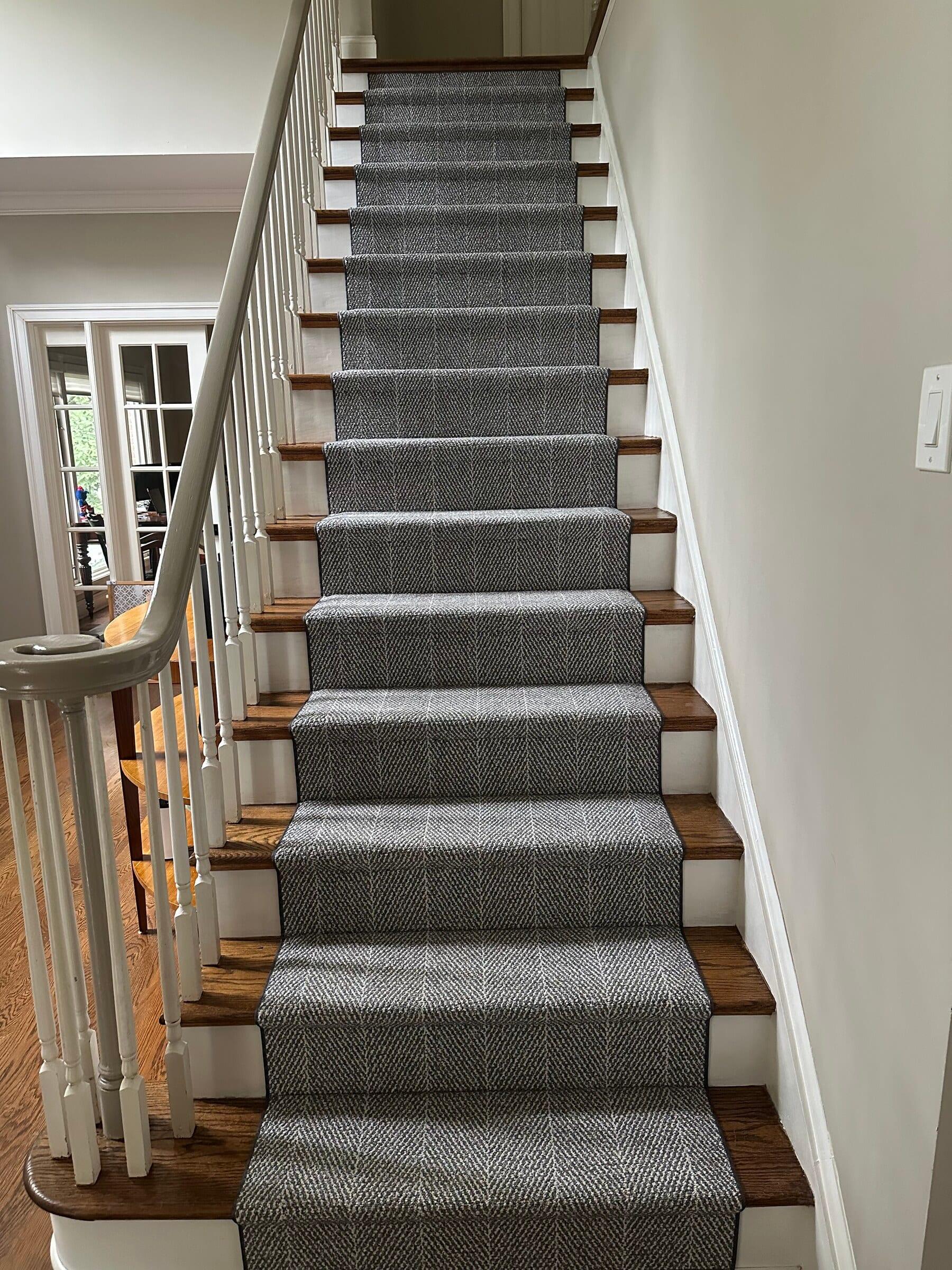
- 8 lb density, 1/4" to 3/8" thickness for stairs and high-traffic hallways, where a thinner, firmer pad holds up under concentrated wear and reduces the chance of trip hazards at edges
- Memory foam pad. Feels great in the showroom, voids most carpet warranties, skip it
Carpet manufacturers publish maximum pad thickness in their warranty terms. Most warranties cap at 7/16". Thicker pad than the warranty allows is the most common reason a denied claim never gets paid out.
Power-stretching is what carpet warranties require
Two methods of pulling a carpet tight during install:
Knee-kicking uses a tool the installer hits with their knee to push the carpet onto the tack strip. It is fast, cheap, and the default for low-bid crews. It almost never produces enough tension on a room over 12 feet across, which is most Aspen Hill living rooms and family rooms.
Power-stretching uses a long pole-mounted tool that braces against one wall and pulls the carpet taut across the room. It takes longer to set up and requires more skill. It is also what carpet manufacturers specifically require for the wrinkle and stretch components of their warranty to apply.
The visible result a year or two later: a power-stretched carpet stays flat. A knee-kicked carpet on a room wider than 12 feet often develops wrinkles or buckles that have to be re-stretched at the homeowner's expense, because the original install wasn't done to the warranty standard.
Ask the question directly when you get bids: will this be power-stretched or knee-kicked? The answer tells you a lot about the installer.
Seam placement is decided before the carpet arrives
Carpet comes in 12-foot or 15-foot wide rolls. Most rooms in an Aspen Hill colonial or rambler are bigger than that in at least one dimension, which means seams. Where the seams land is decided during measurement, not installation.
The rules a good carpet installer follows:
- Seams run with the light source, not across it. A seam perpendicular to a window picks up shadow and reads visible. A seam parallel to the window almost disappears.
- Seams do not run through the main walking paths. The doorway-to-doorway path through a family room, the path from the bottom of the stairs to the kitchen. Those are the lines a seam should not cross.
- Seams do not land under the spot where heavy furniture sits permanently. Couch legs and bed posts pressing down on a seam open it over time.
A careful measure-up considers your furniture layout before drawing the seam plan. We do this on every Aspen Hill estimate. It is the part of the job that costs the installer nothing and matters most to how the finished floor looks.
What this means for an Aspen Hill estimate
Aspen Hill housing stock (split-levels off Connecticut Avenue, colonials in Norbeck Manor, the older Glenmont-adjacent ranchers) tends to have one big open space (family room or living/dining combined) plus a long hallway leading to bedrooms, plus the stairs. That layout means seams in the open space, heavy traffic on the hallway, and a stair installation that has to handle the most concentrated wear in the house.
When you get carpet install bids, the three questions that separate a quality install from a future warranty headache:
- What padding are you using and what's the density rating?
- Will the room over 12 feet be power-stretched?
- Where will the seams fall, given my furniture layout?
If the installer can't answer all three confidently, keep shopping. We're happy to walk through any of these in person at either showroom. Olney is closer for most of Aspen Hill, but the Potomac team can also handle Aspen Hill jobs.
Related service
Carpet installation in Aspen Hill and central Montgomery County
See the service pageMore reads
- Area Rugs & Runners
Custom Area Rugs and Stair Runners in Potomac: Bring Us a Remnant
5 min read - Carpet Installation
How to Prepare for Carpet Installation: A Homeowner Checklist
7 min read - Choosing Carpet
How to Choose Carpet: Fiber, Style, and Where Each One Belongs
7 min read - Luxury Vinyl
Luxury Vinyl Plank in Gaithersburg: Why It's Outpacing Hardwood on New Installs
4 min read