Color is the last decision, not the first
Most carpet shopping starts with a color and a price, which is exactly backward. The Carpet and Rug Institute frames the choice around how a room actually lives first: traffic, pets, sunlight, and whether a door to the outside is nearby. Get the fiber and construction right for the room, and almost any color still looks good in eight years. Get them wrong, and the prettiest carpet in the store will mat, shed, or stain its way to the curb early.
This guide covers the four things that decide that outcome: fiber, construction, the specs on the sample tag, and matching all of it to the room. For how carpet gets installed (padding, power-stretching, and seam placement, which matter just as much), see our carpet installation guide.
The five carpet fibers, and what each is good at
Nearly every residential carpet is built from one of five fibers. Here is the honest version of how they compare.
| Fiber | Durability | Stain resistance | Feel | Cost tier | Best for |
|---|---|---|---|---|---|
| Nylon | Best | Good (treated) | Resilient | $$$ | Stairs, halls, family rooms |
| Polyester (PET) | Moderate | Good on water-based | Very soft | $ | Bedrooms, low-traffic rooms |
| Triexta (SmartStrand) | Very good | Excellent (built in) | Soft | $$ | Kids, pets, busy households |
| Olefin (polypropylene) | Low, crushes | Excellent, bleach-safe | Coarse | $ | Low loop, basements |
| Wool | Best | Natural soil release | Plush | $$$$ | Bedrooms, formal rooms |
- Nylon is the most resilient synthetic. It springs back from foot traffic, holds its texture, and is the safest choice anywhere people walk a lot. It costs more, and it earns it on stairs and in hallways.
- Polyester is soft, takes rich color, resists fading, and is a genuine value. The catch: it flattens faster than nylon in traffic, and while it shrugs off water-based spills, it absorbs body and pet oils that darken over time and do not clean out.
- Triexta (you will see it branded SmartStrand) is partly plant-based and has stain resistance built into the fiber rather than sprayed on top, so it does not wear off. It is soft, handles pets and kids well, and lands between polyester and nylon on price.
- Olefin is colorfast and bleach-safe, which is why it shows up in loop styles and basements, but it crushes easily and is the least resilient of the group.
- Wool is the benchmark for feel and longevity, naturally soil-releasing and resilient. It is a premium purchase that asks for more careful cleaning.
For a deeper breakdown of fibers and construction, This Old House is a reliable reference.
Nylon vs. polyester, and where triexta fits
This is the question we hear most, so here is the short answer. Nylon wins on durability and bounce-back, which is why it belongs on stairs and in the busiest rooms. Polyester wins on softness, color, and price, which makes it a smart pick for bedrooms and rooms that do not see heavy traffic. Triexta is the middle path: close to nylon for everyday toughness, with permanent stain resistance and a wool-like hand that families with pets tend to love.
One myth worth killing: "polyester is basically stain-proof." It resists water-based stains well, but it is not oil-resistant, and in a busy room it will show wear before a comparable nylon does. Buy it for the right room and you will be happy. Buy it for a high-traffic hallway and you will be shopping again sooner than you planned.
Cut pile, loop pile, and what "Berber" actually means
Fiber is half the story. Construction is the other half.
- Cut pile has the yarn loops sheared so the tips stand up. It feels soft and comes in plush or Saxony (smooth and formal, shows footprints), textured (hides marks, the easiest all-rounder), and frieze (tightly twisted and curly, excellent at hiding wear).
- Loop pile leaves the loops uncut. It is durable and hides dirt, and a low, dense loop wears very well.
- Cut-and-loop mixes both to create patterns that hide soil and footprints.
"Berber" is the term people get wrong most. It is not a fiber, it is a low, dense loop construction, usually flecked. It is durable and affordable and beads up spills, but the loops can snag and run from pet claws, vacuum beater bars, and furniture legs, and an olefin Berber can feel coarse underfoot. It helps to know exactly what you are trading off before you buy it.
The specs that predict how long carpet lasts
Salespeople love face weight because it is one big number. It matters, but it does not stand alone. Read all four of these together on the sample tag:
- Face weight is the ounces of yarn per square yard. As a rough guide, under 30 oz is builder-grade, 30 to 40 oz is a solid residential range, and 40 oz and up is built to last.
- Density is how tightly that yarn is packed. The plain-English test from the Carpet and Rug Institute: bend the sample back, and you should not easily see the backing.
- Twist is how many times the yarn is turned per inch. More twist means more resilience, which is why a tight frieze outlasts a loose plush.
- Pile height is how tall the yarn stands. Lower, denser pile resists crushing and cleans up easier, which is why it wins in busy rooms and on stairs.
A moderate-weight, high-density, high-twist carpet will outlast a heavy but loosely built one every time.
The right carpet by room: stairs, bedrooms, pets, and high-traffic
- Stairs take the hardest, most repetitive abuse in the house. Use a cut pile (loops snag on the stair nose) in nylon, lower pile, with real density. Bob Vila's stair-carpet guidance explains the why in detail.
- Bedrooms are about comfort, not abuse, so this is where a soft polyester, a plush wool, or a "silk" nylon earns its place, and a thicker pad is fine.
- Pets call for a solution-dyed nylon or SmartStrand triexta in a cut pile. Solution-dyed means the color is locked into the fiber, so it resists fading, urine, and even diluted bleach cleaners. Skip loops that claws can catch.
- High-traffic rooms want twist and density in a textured plush, a frieze, or a low dense loop, in nylon or triexta.
Questions to ask before you buy
Bring this list to any showroom, ours or anyone else's:
- What room is this for, and how much daily traffic does it really get?
- What is the fiber, and is it solution-dyed?
- What are the face weight, density, and twist?
- Is the stain resistance built into the fiber or a topical treatment?
- What pad does the warranty require, and is it in my quote?
- What does the warranty actually cover, and for how long?
- Can I take the sample home to see it in my own light?
See it in your own light
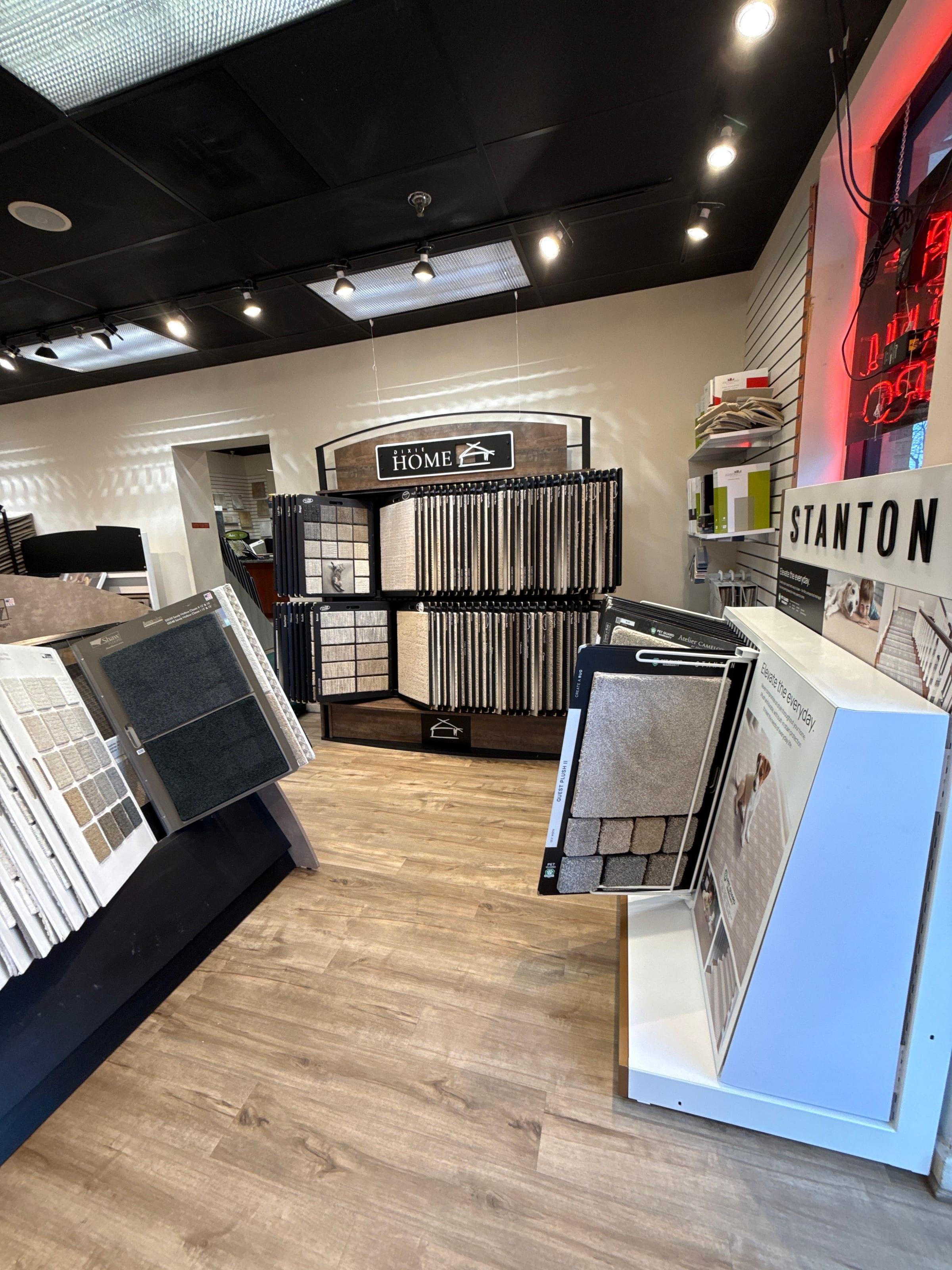
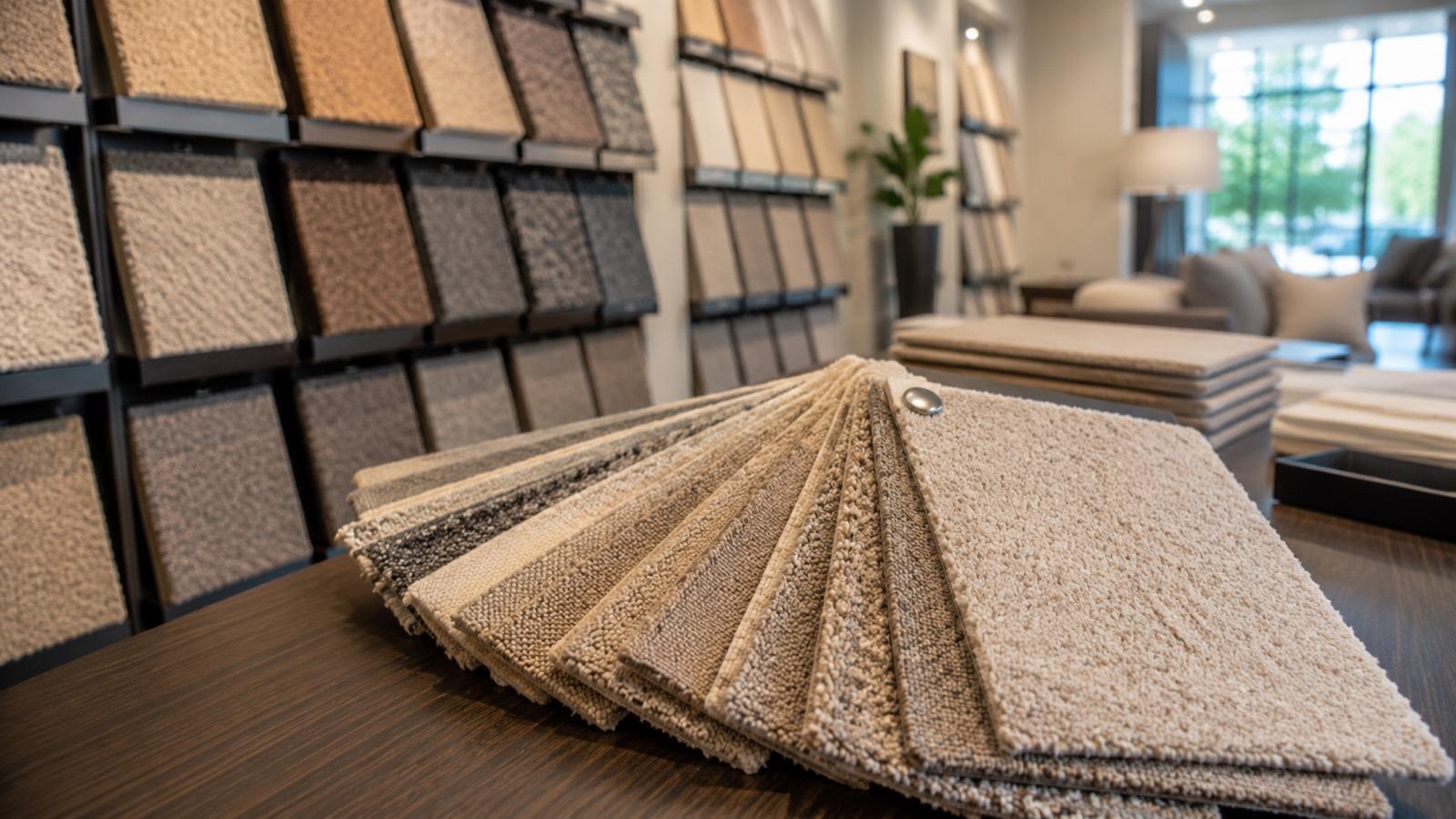
Carpet changes character under your own lighting and against your own walls, and no sample rack can show you that. Bring home the two or three you are deciding between, or bring a room measurement into either the Olney or Potomac showroom and we will narrow it down with you. We measure and install across Olney, Potomac, Rockville, Bethesda, and the wider Montgomery County area, and the right carpet for your stairs is rarely the right one for your bedroom. We are happy to help you pick both. You can also see the full range on our carpet page.
Related service
Carpet installation across Olney, Potomac, and Montgomery County
See the service pageMore reads
- Carpet Installation
Carpet Installation in Aspen Hill: Padding, Stretching, and Seam Placement Decide the Outcome
5 min read - Hardwood Flooring
Is Engineered Hardwood Real Wood? What the Layers Actually Mean
6 min read - Flooring Comparison
LVP vs. Hardwood: How to Choose for a Montgomery County Home
6 min read - Flooring Costs
What Flooring Costs in Montgomery County in 2026: Per-Square-Foot Ranges by Material
7 min read