Where each kind of hardwood actually belongs
There are two main kinds of hardwood we install in Olney homes, and the decision between them is mostly about which floor of the house we're talking about.
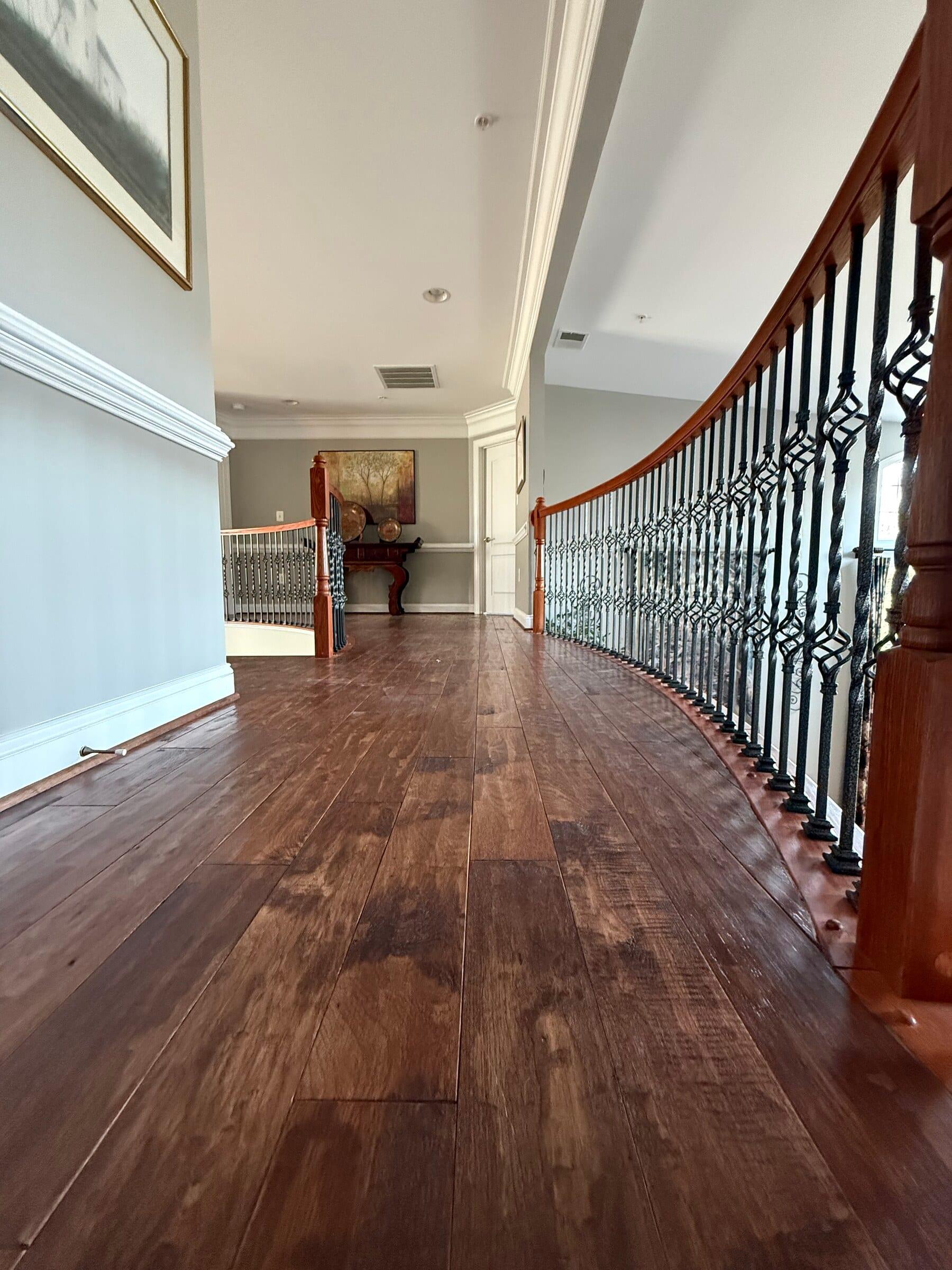
Solid hardwood goes above grade. It's a plank milled from a single piece of wood, every board the same material top to bottom. It can be refinished 5 to 7 times over its lifespan. It wants a dry, stable subfloor, usually nailed to plywood, on the main floor or upstairs.
Engineered hardwood is a real wood veneer on top of a plywood core. The top layer is the same species you'd get in solid; the plywood base handles moisture much better. Engineered installs over concrete, in basements, and on slabs where solid won't hold up. Engineered with a 4 mm or thicker wear layer can usually be refinished 1 to 2 times.
The standard pattern for most Olney, Damascus, Clarksburg, Silver Spring, and upper Montgomery County homes: solid oak on the main floor and second floor, engineered (or LVP) in the basement. When we replace a whole house, we pair solid on the above-grade floors with engineered below grade. That's the default we recommend on most upper-county jobs.
The six species we install most often
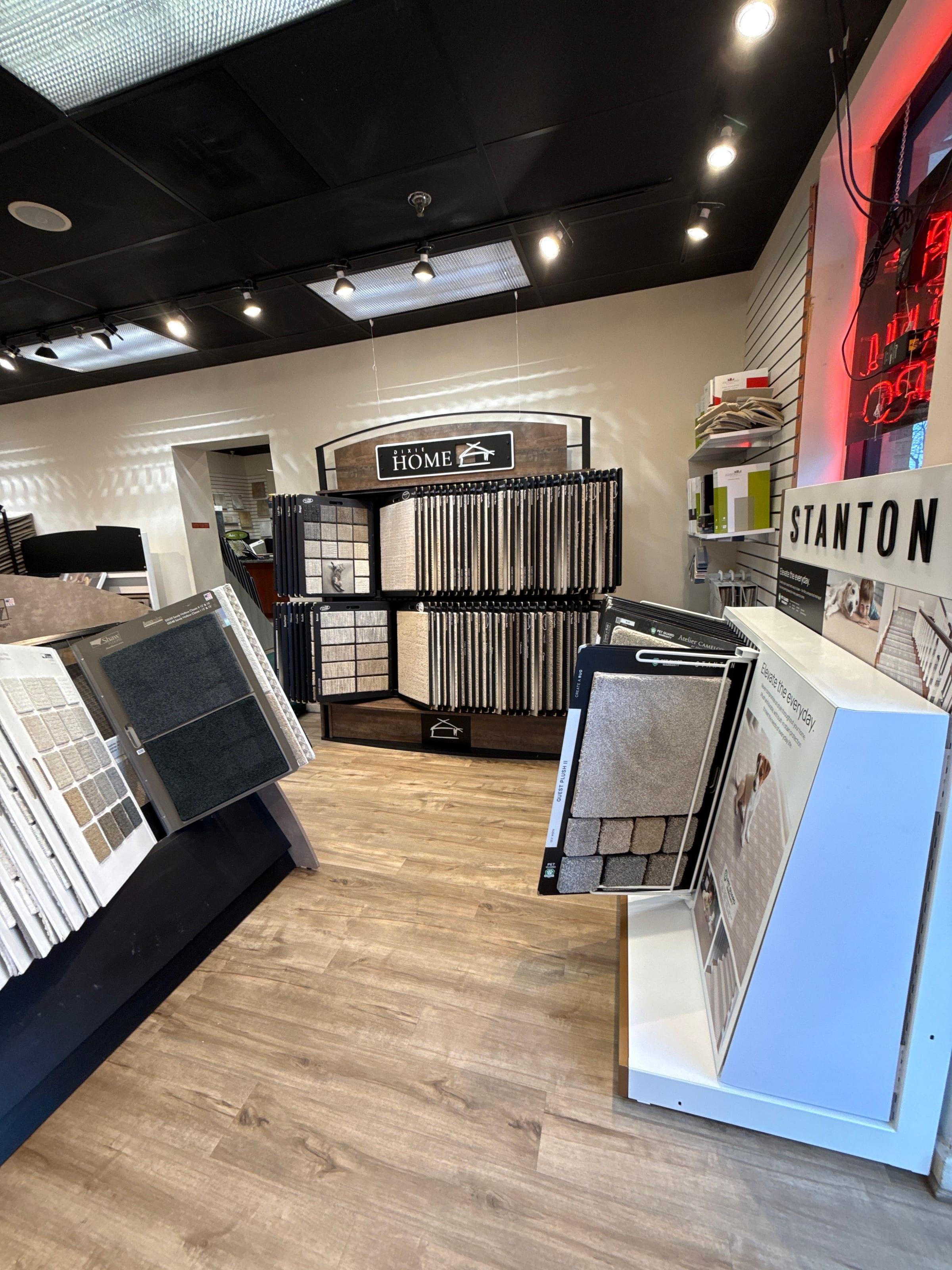
Every species below is on a display board you can physically pick up at the Olney showroom on Village Center Drive. Six species, plank widths from 2 inches to 9.
- Oak. White oak and red oak. The default for a reason. Takes stain beautifully, wears well, ages predictably. About 75% of the hardwood we install in Olney is oak.
- Walnut. Darker, richer, softer. American walnut runs brown to chocolate. Dents easier than oak. Right for formal living rooms and primary bedrooms where the warmth matters more than maximum durability.
- Hickory. The hardest of the common North American species. Strong color variation between boards (light cream to deep chocolate within the same pallet). Right for high-traffic family rooms and houses with large dogs.
- Maple. Light, tight grain, low color variation. Reads modern. Doesn't take stain as evenly as oak, so most maple installs run natural or with a very light tint.
- Birch. Similar look to maple at a friendlier price. Slightly softer.
- American cherry. Warmer red tones that deepen over years of UV exposure. Distinctive look. Softer than oak and walnut.
If you're not sure which species fits your house, the showroom visit is the right next step. Samples on a display board read differently than samples in your actual lighting and against your existing trim.
The plank-width decision
The plank-width question matters more than most homeowners expect.
- 2 to 3 inches: Traditional strip flooring. Common in pre-1960 homes. Replacing strip with strip preserves the original character.
- 3 to 5 inches: The "default" modern width. Reads as mainstream contemporary in most rooms.
- 5 to 7 inches: Wider plank, reads more rustic. Popular in newer construction and renovated open floor plans.
- 7 to 9 inches: The current high-end look. Reads contemporary luxury. Only works in solidly built homes; wider planks telegraph subfloor flatness issues that narrower planks hide.
Wider planks are not "better" than narrower planks. They're a different look that fits different houses. We've seen 7-inch wide-plank engineered installed in 1950s ranch houses where it visually overpowered the room, and we've seen 2-1/4" strip in modern open-plan houses where it looked accidentally retro. The right width is the one that fits the room scale and the rest of the house.
Why the Olney showroom is the hardwood-focused showroom
Both showrooms carry the full hardwood line. But the Olney showroom on Village Center Drive is the flagship and the awards wall lives here. We've been named Mannington Dealer of the Year four times (2021, 2022, 2023, 2025), and the Olney showroom has the deepest selection of Mannington hardwood specifically: the full Restoration Collection, the engineered wide-plank lines, the custom-stain program where you bring a stain target and we match it on the actual wood you're installing.
If you're coming from Damascus, Clarksburg, Gaithersburg, Sandy Spring, or Silver Spring, Olney is the shorter drive. If you're coming from Bethesda, Rockville, or Potomac, you may find Potomac more convenient. Same product line, same install crews. The samples are the same.
When hardwood is not the right answer
We install plenty of LVP and luxury vinyl in upper Montgomery County homes where hardwood doesn't fit the use case. The honest list of when not to install hardwood:
- Basements with any moisture history. Even engineered with a vapor barrier is a risk if the basement has ever flooded or run high humidity. LVP is the safer call.
- Open-plan kitchens with frequent spills. Solid hardwood survives kitchens fine for most households, but if you have young kids, large dogs, or you cook often enough that the floor sees standing water weekly, waterproof LVP outlasts hardwood by years.
- Rooms over crawlspaces with poor ventilation. Solid hardwood cups and crowns when the subfloor moisture cycles seasonally. We can install over a vented, conditioned crawlspace; we can't reliably install over one that runs damp.
- Rentals or short-stay properties. The cost difference between hardwood and engineered (or LVP) doesn't pay back over a 3-to-5-year hold.
We'll tell you on an in-home measure when hardwood isn't the right call for your specific room. We make our money the same way either direction goes.
Related service
Hardwood flooring installation
See the service pageMore reads
- Hardwood Flooring
Hardwood Flooring in Rockville: Solid, Engineered, or Refinish What's Already There
4 min read - Hardwood Refinishing
Refinish or Replace? A Hardwood Floor Guide for Aspen Hill Homes
7 min read - Flooring Planning
Silver Spring Condo Flooring: Rules, Sound, Subfloor, and Installation Logistics
8 min read - Carpet Installation
How to Prepare for Carpet Installation: A Homeowner Checklist
7 min read