Most Potomac hardwood does not need to be replaced
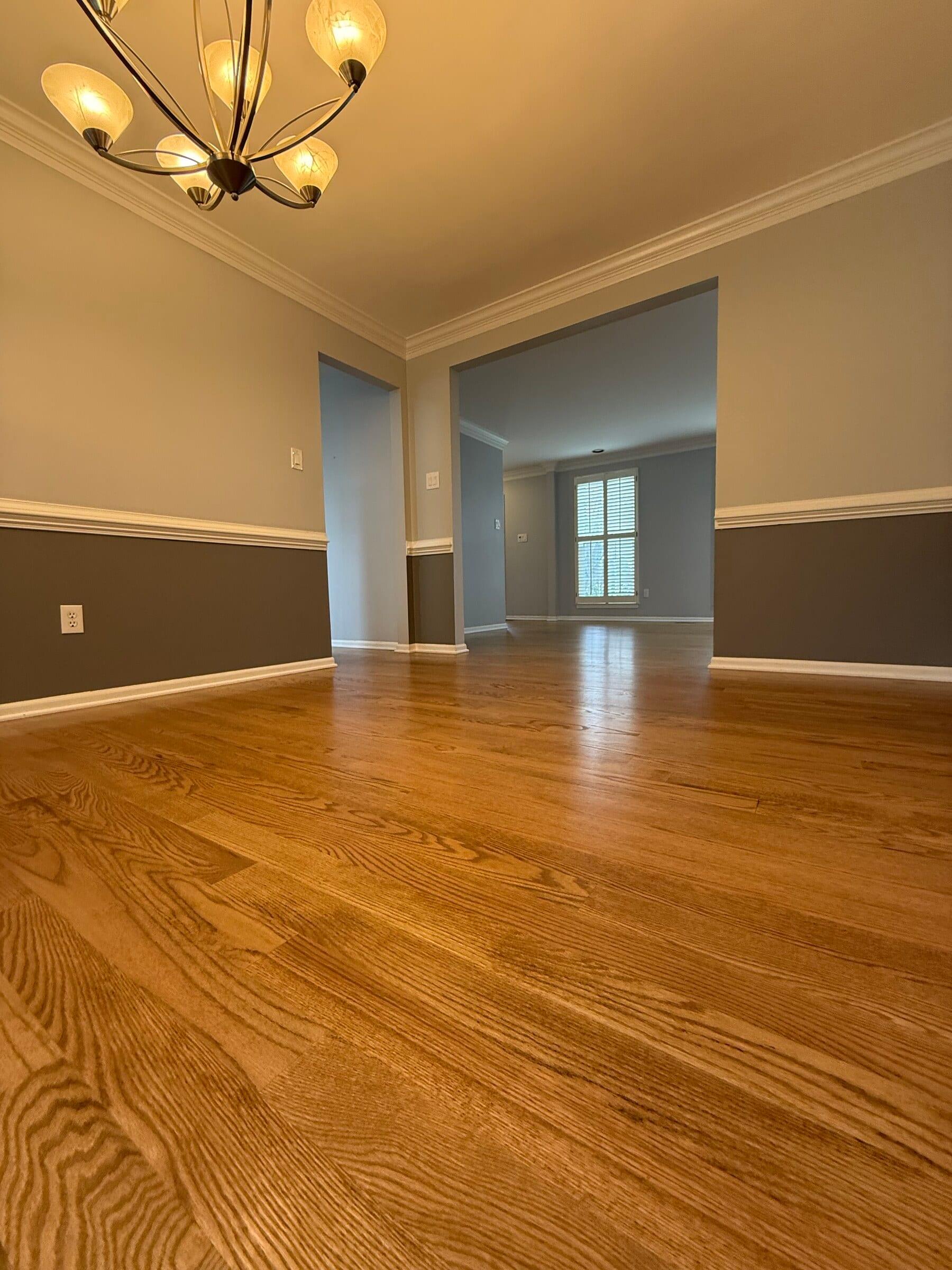
If you live anywhere between Falls Road and River Road in a house built before 1990, the floor under your area rugs is almost certainly fixable. A scratched topcoat is not dead hardwood. The finish on top of the wood wears with foot traffic, pet nails, dropped phones, and twenty years of furniture being moved around. The wood itself sits underneath, structurally unchanged, waiting.
Solid hardwood can be sanded and refinished 5 to 7 times over its lifespan. Engineered hardwood with a wear layer above 4 mm can be refinished 1 to 2 times. Refinishing costs about a third of replacement. Those three sentences are the entire economic case for refinishing instead of starting over, and they apply to the majority of the older homes we look at across Potomac, Bethesda, Chevy Chase, and Cabin John.
This post is for the homeowner who's looking at their floors and asking "is this fixable, or is it time to start over?" The answer is almost always fixable. The rest of the decision is about color, finish type, and which contractor you trust to do the work without turning your house into a dust storm for a week.
The decision: refinish or replace
Five things determine the answer. None of them require an installer to evaluate; you can check most of them yourself in five minutes.
1. Wear-layer thickness. Pull a floor vent and look at the cross-section of the plank. For solid hardwood, you want at least 3/8" of wood above the tongue. For engineered, you want at least 4 mm of veneer. Anything thinner has already been refinished close to its limit and replacement is the better answer.
2. Cupping, crowning, or buckling. Cupping (plank edges higher than the center) usually points to moisture under the subfloor that has to be solved before refinishing. Crowning (center higher than edges) is usually a moisture problem that has already corrected itself. Buckling (planks lifting off the subfloor) means refinishing waits until the underlying issue is fixed.
3. Plank integrity. If you can press a coin into the worst-looking spot and leave a permanent dent, you may have rot or deep moisture damage. That's the one condition where the wood itself has failed.
4. Seam condition. Tight, intact seams across most of the floor say refinish. Gaps wider than a credit card across many planks say the floor has dried out beyond what a refinish can correct.
5. What you actually want. Some Potomac homeowners want wider planks than their 2-1/4" strip oak can ever become. Some want a different species entirely. Those are replacement conversations regardless of condition.
About five out of six floors we look at on Potomac in-home estimates are refinishing candidates. The sixth has one of the five disqualifiers above, and we recommend replacement honestly when that's the call.
Color is the decision that matters most
Once you've decided to refinish, the next question is what color the floor becomes. The wood underneath stays the same. The stain is what changes.
The three options we apply most often in Potomac homes:
- Natural. No stain. The grain carries the color. Reads clean and modern on white oak, warmer on red oak.
- Medium walnut tone. The most-chosen refinish color for older Potomac oak floors. Brings out the grain without going so dark that the character of the original wood disappears.
- Custom stain. We apply samples directly to a section of your floor before committing, so you see the final color on your specific wood, not on a sample board.
Stain choice matters more than finish-system choice because stain is the variable you live with. The polyurethane on top wears off in 10 to 20 years; the stain underneath is permanent until the next refinish.
Dust-contained sanding, in one paragraph
We run dust-contained sanding on every refinish job, out of both showrooms. The sanders connect to a HEPA-filtered vacuum that captures about 95% of the dust generated during sanding. The remaining airborne particulate is contained with plastic curtains in doorways and an air scrubber in the work zone. What this means for a Potomac homeowner: you can stay in the house during the job, your bookshelves and china cabinets in adjacent rooms don't have to be tarped, and cleanup at the end of the day is a microfiber cloth on the trim, not a haul-out of contractor-bag-grade debris.
For comparison, traditional sanding without containment is the version of refinishing that requires moving out for a week and dusting every surface in the house for a month afterward. The price difference between traditional and dust-contained is small enough that almost every homeowner picks dust-contained once they see what the work zone setup looks like.
Why this matters in Potomac specifically
Potomac housing stock skews older than most of Montgomery County. Center-hall colonials from the 1950s through 1970s are common; so are 1980s and 1990s expansions on those original floor plans. Many of those homes still have their original solid oak strip flooring, which means many Potomac homeowners are sitting on hardwood that's been refinished once (or never) and has 3 to 5 refinishing cycles still available.
The math: a 50-year-old oak floor, refinished every 15 to 20 years, can outlast the house itself. The cost over that lifetime is dramatically lower than replacing the floor every 25 to 30 years with new product.
Related service
Hardwood floor refinishing in Potomac and Bethesda
See the service pageMore reads
- Hardwood Refinishing
Refinish or Replace? A Hardwood Floor Guide for Aspen Hill Homes
7 min read - Hardwood Installation
Hardwood Flooring in Olney, MD: Solid Above Grade, Engineered in the Basement
5 min read - Floor Care
How to Make Your Floors Last: A Care Guide by Material
6 min read - Hardwood Flooring
Hardwood Flooring in Rockville: Solid, Engineered, or Refinish What's Already There
4 min read