The short answer: choose for the person and the path
The best flooring for aging in place is not one universal material. A practical starting point is a firm, stable, low-gloss surface that is easy to maintain and installed with as few abrupt transitions as possible. The final choice should fit the resident's mobility, the room, wet conditions, comfort, and cleaning routine.
Flooring is also only one part of a safer home. The CDC's guidance for older adults pairs clear floors and fewer trip hazards with better lighting, handrails, strength and balance work, vision care, and medication review.
This planning is locally relevant. A 2025 Montgomery Planning profile counted 187,245 county residents age 65 or older in 2023, equal to 18 percent of the population. It also found that 80 percent of older-adult households owned their homes.
Start with the route, not the sample
Before comparing colors or materials, map the route used every day: entrance to kitchen, bedroom to bathroom, living area to stairs, and any path to laundry or outdoor space. In many Montgomery County colonials and split-level homes, the biggest issue is not the center of one room. It is the sequence of stairs, landings, thresholds, and mixed surfaces between rooms.
Walk the route and ask:
- Where does the flooring change height or material?
- Which areas get wet from shoes, cooking, bathing, or laundry?
- Does sunlight or overhead lighting create glare?
- Are any edges loose, curled, or difficult to see?
- Will a cane, walker, or wheelchair cross the surface?
- Can spills and routine cleaning be handled quickly?
The answers create a performance brief for the whole floor, not just a shopping list for one room.
How common flooring options compare
| Flooring | Where it may fit | What to examine before choosing |
|---|---|---|
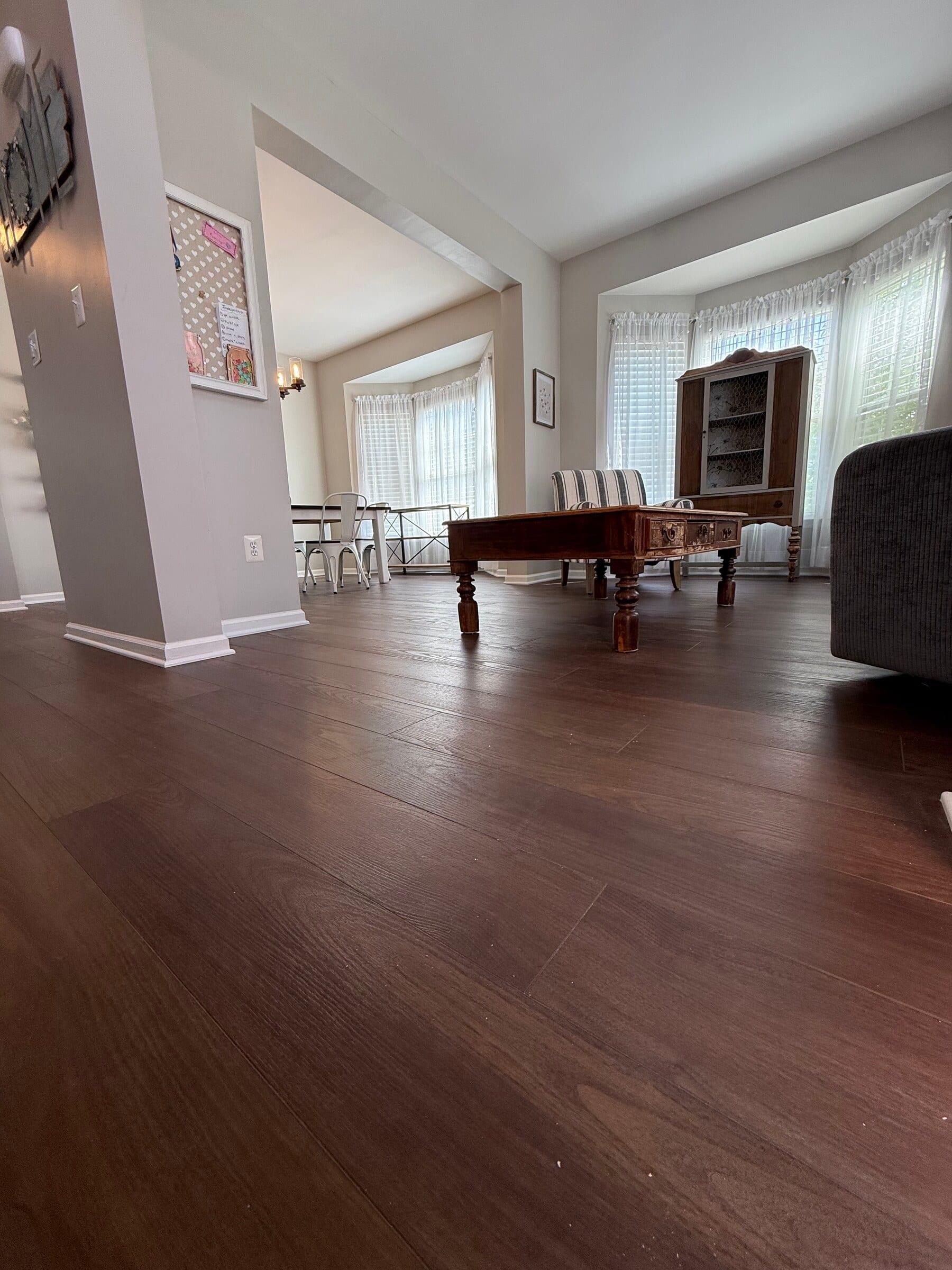
| Luxury vinyl plank or sheet vinyl | Main levels, kitchens, entries, and other rooms where easy cleaning matters | Wet traction, finish glare, seam and transition details, subfloor flatness, and the exact care instructions |
| Solid or engineered hardwood | Living areas and connected rooms where a firm surface and long-term repair options matter | Finish sheen, seasonal movement, water exposure, board texture, refinishing potential, and height at adjoining floors |
| Low-pile carpet | Bedrooms or sitting areas where warmth, quiet, and underfoot comfort are priorities | Secure attachment, pile height, firm backing or cushion, edge treatment, cleaning demands, and rolling resistance |
| Laminate | Dry rooms where a firm surface and wood look fit the household | Moisture at seams, wet traction, surface texture, damaged-plank replacement, and transition height |
| Tile | Bathrooms, entries, or other areas where the selected product suits moisture exposure | Wet traction, grout joints, surface gloss, hardness, temperature, maintenance, and thresholds |
These are starting points, not safety rankings. Compare the exact product, installation system, and room conditions. A luxury vinyl floor with an unsuitable finish or raised transition may be a worse fit than a carefully specified hardwood or carpet installation.
Slip resistance is a condition, not a category
The U.S. Access Board describes accessible floor surfaces as stable, firm, and slip resistant, but its technical guidance on floor surfaces does not name one universally safe material or set one minimum coefficient of friction. Slip-resistance numbers only make sense with the test method and conditions used.
Ask how the exact product performs when dry and wet, then consider the finish, cleaning products, tracked-in water, footwear, and slope. A "waterproof" claim describes how a product handles water exposure. It does not mean a wet floor cannot be slippery.
Low gloss can help limit reflected light, but it does not replace good lighting or create a guarantee. AARP's HomeFit guidance treats lighting, glare, color contrast, and floor conditions as parts of the same room-level plan.
Plan every transition before installation
Room-to-room continuity can reduce both physical and visual interruptions. When materials must change, the flooring plan should account for finished height, underlayment, cushion, trim, doorway clearance, and the direction a mobility aid will cross the transition.
The Access Board permits a vertical level change up to 1/4 inch on covered accessible routes, requires changes between 1/4 and 1/2 inch to be beveled, and treats larger changes as ramps. These are technical standards for covered accessible routes, and the Access Board explains that individually owned or leased private homes are generally outside the ADA Standards. The dimensions are still useful reference points when asking an installer how a carpet-to-hardwood edge or doorway threshold will be finished.
Mobility aids favor firm, predictable routes
Wheelchairs and walkers generally move more easily across firm, smooth surfaces than across thick cushion or loose flooring. The Access Board notes that softer carpet and backing increase rolling resistance. Where carpet is preferred, focus on secure installation, lower pile, firm backing, fastened edges, and a carefully detailed transition.
Surface texture still requires judgment. Enough texture may support traction in the tested condition, while deep embossing, uneven joints, or rough stone can create vibration or resistance for small wheels. Bring the mobility aid, or its wheel and clearance measurements, into the product conversation when possible.
Treat stairs, runners, and loose rugs separately
Stairs need consistent treads, secure surfaces, useful contrast, good lighting, and handrails. If a runner is part of the plan, it should be fitted and secured for that staircase. Our guide to custom stair runners explains why width, binding, pattern alignment, and installation are project-specific.
Loose throw rugs are different. The CDC advises removing trip hazards such as throw rugs and keeping floors free of clutter. If a household keeps an area rug, discuss a low-profile, slip-resistant setup that lies flat, stays secured, and does not create a difficult edge along the main route.
Make maintenance part of the safety plan
A floor only performs as intended when it is clean, dry, intact, and maintained with approved products. Consider who will sweep, vacuum, mop, clean spills, manage entry water, and notice a loose edge or damaged plank.
Manufacturer guidance matters here. For example, Mannington's resilient-floor care instructions call for prompt spill cleanup and warn that resilient floors can be slippery when wet. Check the instructions and warranty for the exact collection rather than applying one routine to every material. Our floor-care guide covers the basic differences among hardwood, luxury vinyl, laminate, and carpet.
Montgomery County also operates a Home Accessibility Rehabilitation Program for eligible residents. Flooring is only one possible part of a larger accessibility plan that may include entrances, handrails, bathrooms, lighting, or other home modifications.
Compare the full system in person
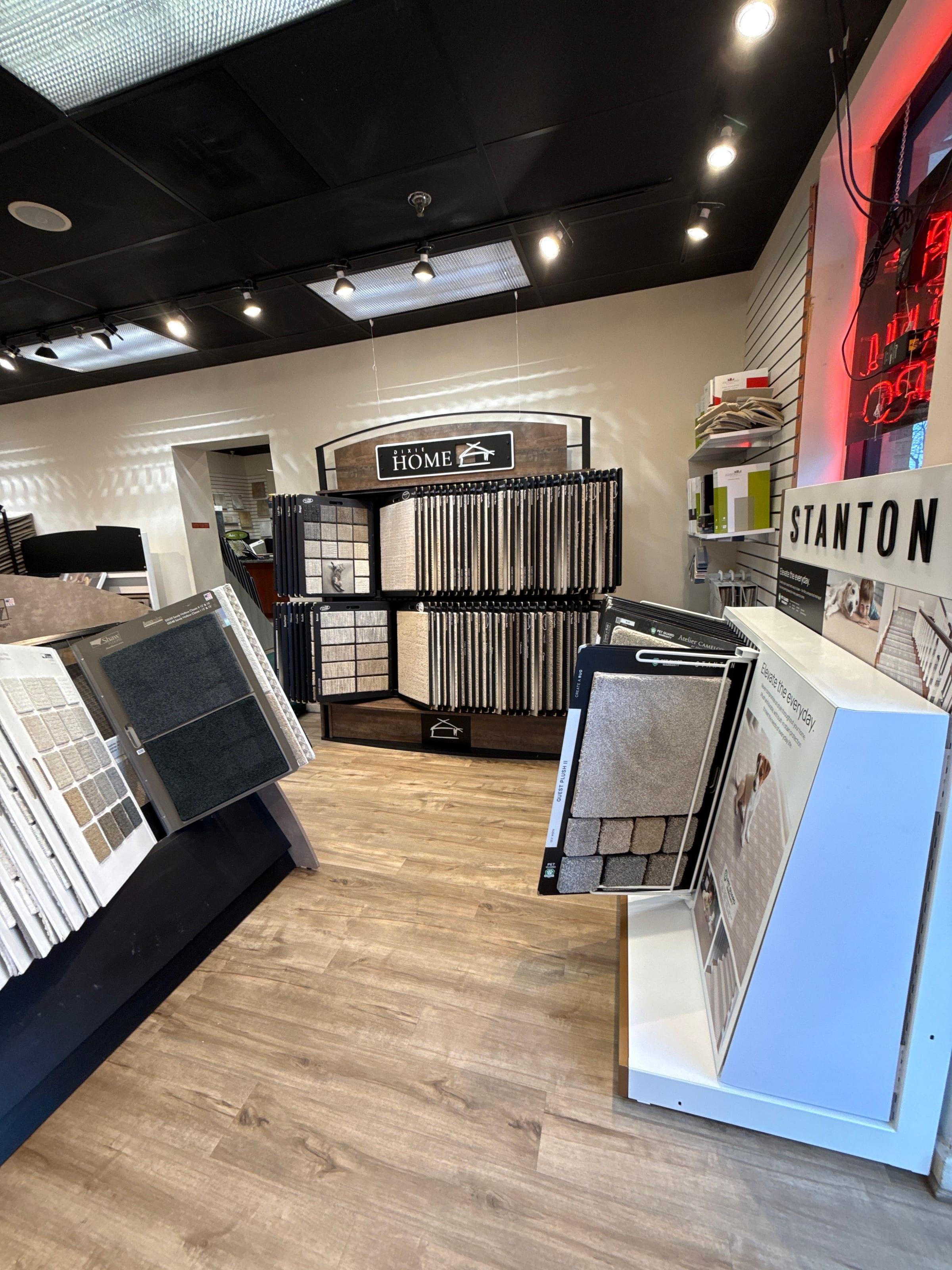
Bring photos of each room, measurements, transition close-ups, stair details, wet-area concerns, and any mobility-aid dimensions to either our Olney showroom or Potomac showroom. We can compare the actual samples, technical specifications, finish, installation requirements, maintenance, and room-to-room plan for homes across Montgomery County.
Related service
Flooring options across Olney, Potomac, and Montgomery County
See the service pageMore reads
- Whole-Home Remodels
Choosing Flooring for a Whole-Home Remodel in Bethesda
5 min read - Flooring Costs
What Flooring Costs in Montgomery County in 2026: Per-Square-Foot Ranges by Material
7 min read - Floor Care
How to Make Your Floors Last: A Care Guide by Material
6 min read - Flooring Comparison
LVP vs. Hardwood: How to Choose for a Montgomery County Home
6 min read