
Replacing flooring in a Silver Spring condo starts with the building, not the sample board. Before ordering carpet, luxury vinyl, or engineered hardwood, get the written flooring rules, confirm whether the proposed floor and underlayment need approval, identify the existing subfloor, and document the work-hour, delivery, elevator, insurance, and debris requirements that apply to your property.
That order matters because a flooring product and an approved flooring assembly are not the same thing. A plank may be suitable for the room while the underlayment, attachment method, or complete floor-and-ceiling assembly fails the building's rules. Settling those questions first protects the product choice, the installation date, and the relationship with the neighbors below.
Silver Spring has a wide range of housing types. Montgomery Planning describes Eastern Silver Spring as a mix that includes single-family houses, duplexes, condominiums, townhouses, and apartment buildings. A useful flooring plan therefore begins with the property type and the actual documents for that building.
Get the written flooring rules before you shop
Ask the property manager, association, landlord, or building office for the current rules in writing. Do not rely on what a neighbor remembers from a previous project. Policies change, and two buildings on the same block can require different documents or assemblies.
The first request should cover:
- Whether flooring replacement requires prior written approval.
- Which rooms may use hard-surface flooring.
- Whether carpet, area rugs, or another soft surface must cover part of the finished floor.
- Whether the building requires a tested acoustic rating or a particular underlayment.
- Whether the submission must identify the finish floor, underlayment, subfloor, and installation method as one assembly.
- Whether a contractor certificate of insurance is required and what it must say.
- Approved work hours, delivery windows, elevator reservations, loading locations, and parking rules.
- Rules for hallway protection, dust control, removal, and debris.
Condominium rules are private property requirements, not a single countywide flooring standard. Montgomery County's common-ownership guidance explains that owners have responsibilities under their association documents and rules. The practical lesson is simple: obtain the rule that applies to your unit before a product is ordered.
Approve the complete assembly, not just the visible floor
The floor you see is only the top layer. The result also depends on the underlayment, adhesive or locking system, subfloor, and the ceiling construction below. When a building asks for acoustic documentation, it may be evaluating how that full assembly handles impact or airborne sound.
You may see three terms in building documents:
- IIC describes impact sound transmission through a tested floor-and-ceiling assembly.
- STC describes airborne sound transmission through a tested assembly.
- Delta IIC describes the improvement associated with a tested floor covering or underlayment over a reference assembly.
Those numbers are useful only when the test setup resembles the actual construction. ASTM's E2179 guidance notes that the same floor covering can produce different IIC results when paired with different base floor assemblies. A high number on an underlayment brochure does not automatically prove that every building will approve it. Ask management what documentation it accepts, then have the proposed system reviewed against that requirement.
The safest sequence is:
- Obtain the building's written standard.
- Identify the existing subfloor and the construction below it as far as the building can document.
- Select a finish floor and compatible underlayment.
- Submit the complete proposed assembly.
- Wait for written approval before ordering nonreturnable material or reserving installation.
Confirm the subfloor before choosing the installation method
Subfloor conditions can change which products and methods make sense. Concrete, plywood, an existing resilient floor, and an unknown layered assembly are different starting points. The room also needs to be checked for flatness, moisture concerns, damaged areas, and transitions to adjacent floors.
Shaw's vinyl planning guidance emphasizes that installation begins with the condition of the subfloor and the requirements for the selected product. For a condo project, add five practical questions:
- Is the subfloor concrete, wood, or an existing approved surface?
- Does the building allow the old floor to remain, or must it be removed?
- Will the proposed floor height interfere with doors, appliances, cabinets, or balcony thresholds?
- Where will the new floor meet tile, carpet, wood, or another unit-level finish?
- What happens if removal reveals moisture, cracks, uneven areas, or an older material that should not be disturbed without evaluation?
Do not bury those questions inside a single installation allowance. The proposal should state how ordinary preparation is handled and how an unexpected condition will be documented, priced, and approved before additional work begins.
Plan the route from the truck to the room
In a detached home, delivery access may mean a driveway and a front door. In a Silver Spring condo or apartment building, access can involve a loading area, service entrance, freight elevator, hallway protection, reserved times, and material limits inside the unit.
Confirm the route before the installation date:
- Where can the delivery vehicle stop?
- Does the building require a loading reservation?
- Which entrance and elevator must the crew use?
- Who reserves the elevator, and how long is the reservation?
- Is temporary protection required in the lobby, elevator, or hallway?
- Where can removed flooring and packaging wait before leaving the property?
- Can long planks, broadloom carpet, or stair-runner material fit through the route?
- Are there daily limits on noise, cutting, or debris movement?
Montgomery County maintains noise-control rules, but a building can also impose its own work hours and renovation procedures. Follow the most specific rule that applies to the project.
Compare flooring by the room and the building
There is no single best floor for every Silver Spring condo. The useful comparison begins with the room, the building rules, the subfloor, and the household.
Carpet
Carpet provides a soft surface and can simplify the sound conversation in bedrooms and living areas. The decision still includes cushion, seam placement, transitions, furniture, removal, and the condition below the old floor. Confirm whether the building has a carpet-coverage requirement and whether it applies to specific rooms.
Luxury vinyl plank
Luxury vinyl can be practical where the building permits hard-surface flooring and the complete assembly is approved. Pay attention to subfloor flatness, floor height, transition details, and the exact underlayment allowed by both the product manufacturer and the building.
Engineered hardwood
Engineered hardwood can provide a real-wood surface with construction intended for dimensional stability. Approval still depends on the building, the proposed attachment method, the acoustic system, and the existing conditions. Do not assume an engineered product is automatically permitted because it is more stable than solid hardwood.
The material decision should follow the constraints, not fight them. If a building requires carpet in bedrooms, that is part of the design. If it permits hard surface only with an approved assembly, compare complete systems rather than shopping by plank alone.
Put every responsibility into the written scope
Before installation, the written proposal should answer who is responsible for:
- Building approval and product documentation.
- Insurance documents and building forms.
- Measuring, material quantities, and delivery acceptance.
- Furniture, electronics, closets, appliances, and specialty items.
- Existing-floor removal and disposal.
- Subfloor evaluation and ordinary preparation.
- Approval of repairs or added work discovered after removal.
- Transitions, reducers, door clearance, trim, and baseboards.
- Common-area protection and final cleanup.
- Elevator and loading coordination.
These responsibilities vary by project. A clear scope is more valuable than an assumption, especially when the building, resident, flooring company, installer, and property manager each control a different part of the day.
A short checklist before you order
- Current building flooring rules received in writing.
- Approval process and required forms identified.
- Proposed finish floor, underlayment, subfloor, and installation method documented.
- Acoustic documentation accepted by the building, if required.
- Existing subfloor and transition conditions reviewed.
- Floor height, doors, appliances, and thresholds checked.
- Work hours, loading, parking, elevator, and access confirmed.
- Insurance and contractor requirements confirmed.
- Furniture, removal, debris, protection, and cleanup assigned in writing.
- Unexpected-condition approval process included in the proposal.
- Written building approval received before nonreturnable material is ordered.
Plan the flooring and the logistics together
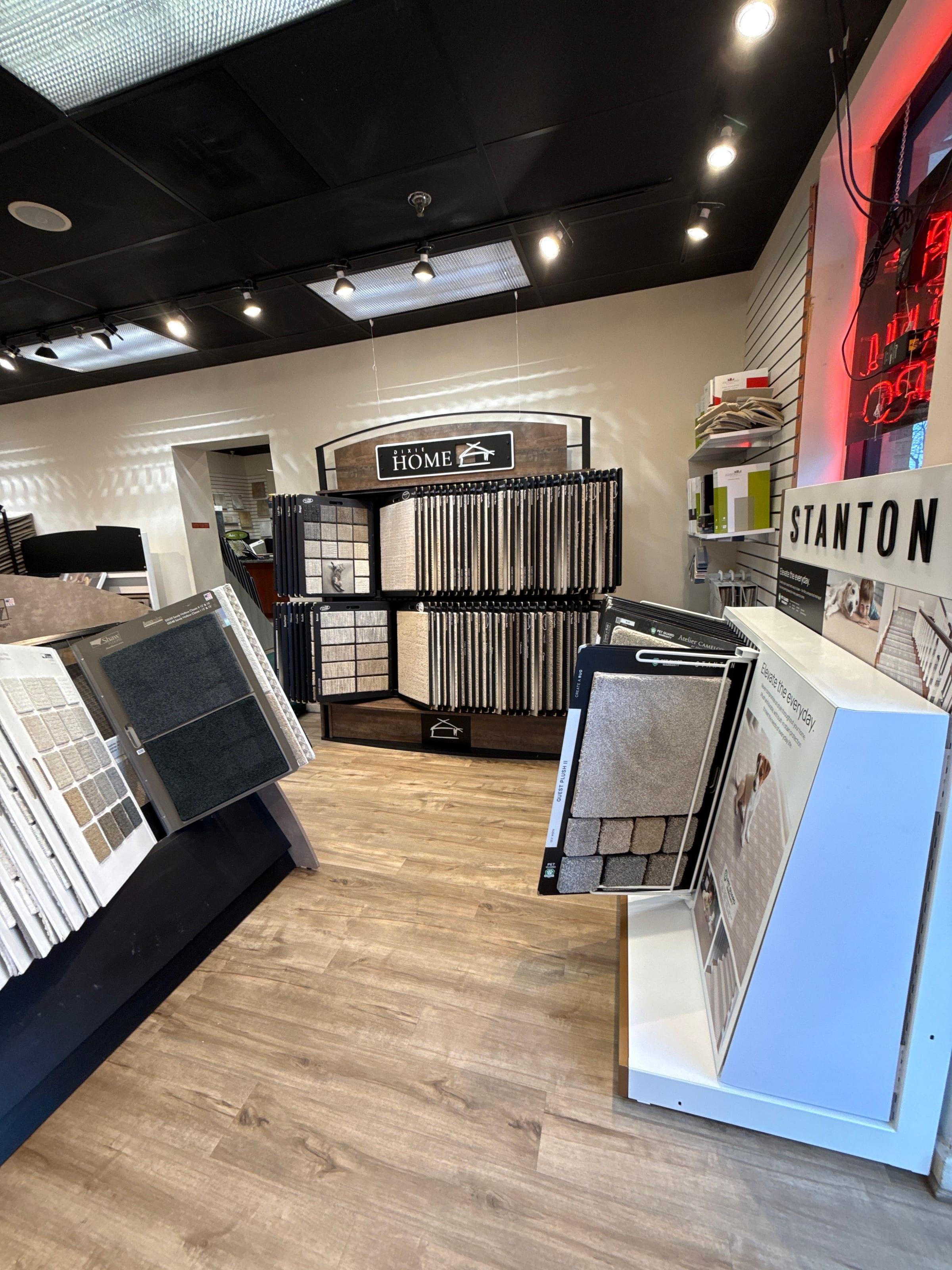
The Silver Spring flooring page is the starting point for comparing carpet, luxury vinyl, hardwood, laminate, and other options for the area. Bring the building rules, room measurements, photos of transitions, and any product or acoustic forms when you visit Carpet & Vacuum Expo. Both the Olney showroom and Potomac showroom can help you compare materials. The exact building coordination and installation responsibilities should be confirmed in the written project scope.
Start a flooring conversation once you have the building documents in hand. That turns the first appointment into a specific planning session instead of a round of guesses.
Related service
Flooring for Silver Spring homes, condos, and apartments
See the service pageMore reads
- Carpet Installation
How to Prepare for Carpet Installation: A Homeowner Checklist
7 min read - Flooring Planning
Replacing Flooring One Room at a Time in Germantown: How to Plan the Connections
7 min read - Hardwood Installation
Hardwood Flooring in Olney, MD: Solid Above Grade, Engineered in the Basement
5 min read - Carpet Installation
Carpet Installation in Aspen Hill: Padding, Stretching, and Seam Placement Decide the Outcome
5 min read