For a Rockville townhome, carpet is worth considering where softness and quieter room acoustics matter most, especially bedrooms and upper halls. Luxury vinyl plank, or LVP, is worth considering where easier routine cleanup is the priority. You can use both in the same home. The best combination depends on how you use each level, how the stairs connect them, and what is underneath the existing floor.
Start with a room map before choosing a color. A busy entry, a bedroom above the living room, and a lower-level office ask different things of a floor.
Rockville's King Farm planning-area document describes a neighborhood containing detached homes, townhouses, and apartments. Even within one neighborhood, the property type and construction can differ. A sample chosen for another home is useful inspiration, but your own rooms should drive the decision.
Start with the way each level is used
Walk through the house and note the daily routine. Where do shoes come off? Where does the dog spend the day? Which room needs to stay quiet while someone sleeps or works? Then compare materials against those priorities.
| Space | Start with |
|---|---|
| Bedrooms and halls | Comfort, sound, and daily care |
| Main level | Dirt, spills, and furniture |
| Stairs | Approved stair parts and transitions |
| Lower level | Room use, moisture, and subfloor condition |
If you want one material everywhere, test that preference against the hardest room first. If you prefer a mix, identify exactly where each material will stop.
Bedrooms and upper halls: weigh comfort against cleaning
Carpet provides a soft surface underfoot and can help absorb sound within a room. That can make it appealing for bedrooms, reading spaces, and an upstairs hall where people move around while others sleep. The Carpet and Rug Institute's benefits guide explains carpet's cushioning and sound-absorption characteristics.
The carpet and its cushion need to work together. The institute's carpet-selection guidance recommends matching cushion to the carpet manufacturer's requirements and the use of the room. A thicker, softer pad is not automatically the right choice for a heavily traveled hall or stairs.
LVP may be more appealing in an upstairs room where you prioritize a wipeable surface. Shaw's flooring comparison outlines the different comfort and maintenance characteristics of these flooring categories. Compare the exact products, including their care instructions, rather than expecting every carpet or vinyl plank to perform alike.
Bring a few samples home if available. View them beside your trim and furniture, and consider the feel you want when getting out of bed or walking down the hall.
Separate room sound from sound traveling downstairs
A quieter-feeling bedroom and reduced footsteps in the room below are related goals, but they are not the same measurement.
The Carpet and Rug Institute's acoustical guide distinguishes sound absorption from transmission and impact sound. Impact Insulation Class, or IIC, describes performance of a tested floor-and-ceiling assembly. It is not a universal promise attached to an underlayment roll.
For a conventional townhome, identify the rooms within your home where overhead footsteps matter. For a stacked or condominium-style property, also obtain any current written flooring requirements. If documentation is required, confirm that it applies to the proposed flooring and construction before ordering.
Do not add an unspecified pad beneath LVP to chase a sound rating. First establish what the flooring manufacturer permits and what assembly the acoustic evidence actually covers.
Main living areas: plan for daily cleanup
For an entry connected to a living or dining room, think about the route from the door to the kitchen, the furniture you move, and the places where spills happen.
LVP can offer a practical hard-surface cleaning routine, but it still needs care. Mannington's vinyl-floor maintenance guidance recommends removing grit, cleaning spills promptly, and protecting the floor from furniture damage. A durable floor is not immune to scratching, and a pet-friendly marketing label does not eliminate maintenance.
If the main floor already has hardwood, consider how new flooring will meet it. Similar wood tones can still differ visibly in grain, sheen, board width, and height. Bring a photo and, where possible, a sample of the existing surface. Our Rockville hardwood guide covers the wood-floor side of that comparison.
Treat stairs as their own part of the project
Make the stair decision while choosing the room flooring. Otherwise, you may settle on a plank color before discovering that the stair components or edge details do not create the finish you expected.
For carpeted stairs, confirm whether the plan is wall-to-wall carpet or a runner, along with the cushion, landings, turns, and exposed edges. Ask whether the selected carpet is appropriate for that use.
For a vinyl stair finish, ask for the manufacturer's approved system. Mannington's SimpleStairs is one example of a dedicated tread system for specified flooring collections. It illustrates why stair selection needs more than a box of room planks; it is not a claim that every color or component is stocked locally.
Confirm these details in the proposal:
- Which flights and landings are included.
- The finish at the top and bottom of each flight.
- The tread or nosing, riser treatment, and exposed-edge finish.
- The connection to carpet, plank, or existing flooring on each level.
Lower levels: check the floor beneath the sample
A finished lower level could be a playroom, office, guest space, or busy entrance. Its location alone does not determine the material. Establish the room's purpose, then evaluate whether the underlying conditions suit the product.
Waterproof flooring does not solve water or moisture beneath it. As a product-specific example, Mannington's ADURA Max installation guide requires appropriate subfloor preparation and addresses concrete moisture limits. It also says additional padding is not recommended for ADURA Max and ADURA Rigid, which have attached underlayment. Other products have their own requirements.
Ask how moisture, uneven areas, and existing floor layers will be evaluated before installation, and how any necessary preparation will be priced. Do not assume that a floating floor can bridge an unsuitable surface. For a deeper look at below-grade conditions, see our Montgomery County basement flooring guide.
What a mixed-floor plan could look like
Consider a hypothetical three-level townhome where the household wants a soft bedroom floor and easier cleanup near the entrance. This is a planning example, not a completed Carpet & Vacuum Expo project.
The initial plan might be:
- Upper level: Carpet in the bedrooms and hall, with a suitable carpet-and-cushion combination.
- Main level: LVP through the entry and shared living space, if compatible with the existing conditions.
- Stairs: Carpet carried between levels, with the landing and plank transitions defined in advance.
- Lower level: A separate decision after confirming room use, moisture conditions, and preparation needs.
That plan might change if the upper floor serves as a busy home office, if a household prefers hard surfaces throughout, or if the existing main-floor hardwood is worth keeping. The point is to make each choice deliberately instead of letting the first sample decide the whole house.
Compare complete proposals before deciding
The useful comparison is the price for the same finished spaces, with the responsibilities clearly defined.
Ask each proposal to identify the exact flooring and approved cushion or underlayment, included rooms and closets, removal and disposal, ordinary preparation, stairs, transition pieces, and any trim work. Clarify furniture responsibilities and how additional work will be documented and approved if removal reveals an unexpected condition.
At each material change, confirm both appearance and finished height. Mannington's molding guide illustrates different transition pieces for different connections. Color coordination alone does not establish that a piece is appropriate for the adjoining floors.
Compare carpet and LVP with your room plan in hand
Carpet & Vacuum Expo serves Rockville and the wider Montgomery County area from its Olney showroom and Potomac showroom. Bring room notes, photos of stairs and transitions, and the priorities that matter most to your household.
Explore our carpet options, luxury vinyl flooring, and Rockville flooring guide, or contact the team to discuss your project. You do not need a final material choice before starting the conversation. A clear picture of how you use the home is a useful first step.
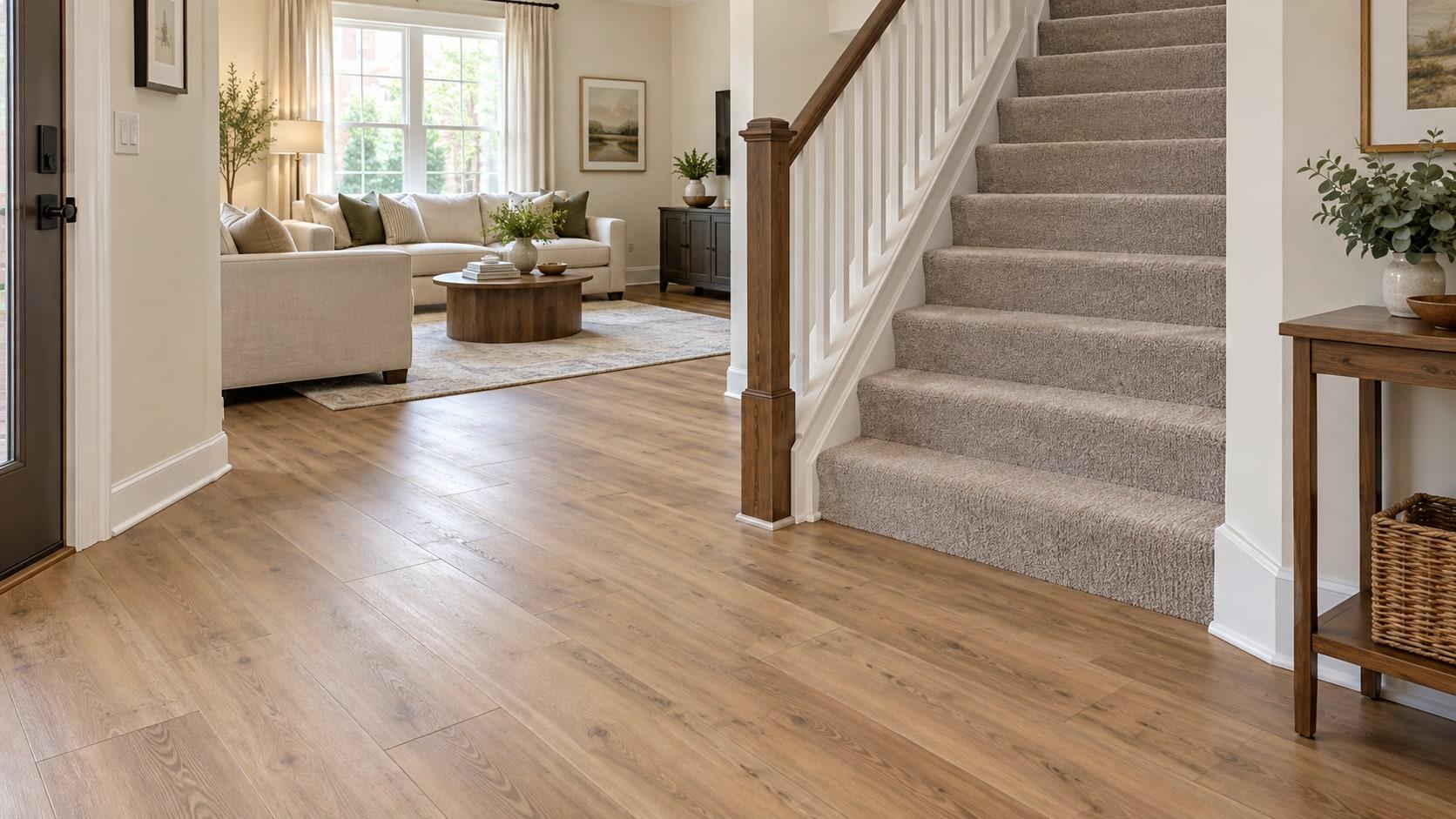
The hero image is a generated illustration of a flooring combination, not a completed customer project.
Related service
Explore flooring for your Rockville home
See the service pageMore reads
- Carpet Installation
Carpet Installation in Gaithersburg: A Townhome Planning Guide
8 min read - Carpet Installation
How to Prepare for Carpet Installation: A Homeowner Checklist
7 min read - Choosing Carpet
How to Choose Carpet: Fiber, Style, and Where Each One Belongs
7 min read - Carpet Installation
Carpet Installation in Aspen Hill: Padding, Stretching, and Seam Placement Decide the Outcome
5 min read