Refinish or replace? For hardwood floors in an Aspen Hill home, the useful starting point is what can be retained, not simply how old the floor is. Ask whether the problem is in the finish, the wood, or the conditions beneath it, then compare that finding with the result you want.
A dull living room, damaged boards near a doorway, and a stair landing that no longer matches may need different answers. Before choosing new flooring or a stain color, map the areas you want to improve and arrange an assessment of the existing floor.
Compare the options before choosing a color
Use these questions to frame the conversation. They are a starting point for an inspection, not a diagnosis from a photograph.
| Option | Question to ask |
|---|---|
| Recoat | Is the existing finish suitable for another coat after preparation? |
| Sand and refinish | Can the wood be sanded safely, and will that achieve the result I want? |
| Repair selected areas | Can damaged boards be addressed while keeping the surrounding floor? |
| Replace | What cannot be retained, and what would a new floor change? |
The National Wood Flooring Association's refinishing guidance distinguishes a maintenance coat from sanding back to bare wood. The latter can address deeper wear and allow a color change. Whether another sanding is possible depends on factors including wear-layer thickness, flatness, condition, and previous work, not a universal number of refinishing cycles.
Ask the person preparing your proposal to name the recommended process. A quote labeled only “restore floors” leaves too much open to interpretation.
Identify the floor you already have
Look for an old invoice, leftover carton, product label, or installation record. Those details are more useful than guessing from the visible grain. Bring them to the flooring conversation along with photos of the rooms and problem areas.
If the floor is engineered hardwood, the word “engineered” does not settle whether it can be sanded. The NWFA's voluntary Refinishable Program identifies engineered products with sufficiently thick wood wear layers. That is product-level information, not a substitute for assessing an installed floor's present condition.
Ask:
- What is the floor's construction, and how was it identified?
- Is there enough usable wood for the proposed work?
- Is there evidence of previous sanding or uneven wear?
- What does the manufacturer permit for this particular product?
Our engineered-hardwood explainer covers the construction differences. Keep the exact product information with your project notes, especially if you are comparing refinishing with new hardwood flooring.
Separate worn finish from damaged wood
Describe what you see without deciding on the repair first: dull traffic paths, scratches, dark areas, loose boards, or a change in surface height. Photograph the whole room as well as the individual concern so the assessor can see its context.
If recoating is proposed, discuss past cleaning and polishing products. Bona's Recoat System technical sheet shows why preparation and finish compatibility matter: it addresses contaminants and includes precautions for textured flooring. It is one manufacturer's system, not a statement that every floor can receive the same treatment or that Carpet & Vacuum Expo uses that exact product.
For an isolated damaged area, ask for two clearly described possibilities: keeping the surrounding floor with an appropriate repair, and replacing a larger area. Request an explanation of what the repair would look like beside older boards. Matching expectations should be part of the decision before work starts.
Investigate moisture before treating it as a cosmetic problem
Raised board edges or persistent gaps deserve a closer look. The NWFA's moisture-management guidance explains that wood gains and loses moisture with its environment, which can cause swelling, cupping, shrinkage, or gaps. Seasonal movement and a persistent problem are not necessarily the same situation.
If there has been a leak, a damp lower level, or a recent change in the floor, share that history before agreeing to surface work. Ask who will evaluate the cause and what must be resolved before the flooring scope is finalized. Do not assume that sanding or covering the floor answers the moisture question.
This guide is not a water-damage assessment. An active leak or unresolved building issue needs appropriate evaluation beyond choosing a flooring finish.
Plan the connections in a split-level home
If your Aspen Hill home has a short flight of stairs between the living and dining areas, or several connected landings, include those connections in the first walk-through. Deciding one room at a time can leave the most visible junctions until last.
Make a simple sketch showing the work area and the flooring you intend to keep. Mark:
- Stair treads, risers, and landings, with their proposed treatment.
- Doorways where existing and changed flooring will meet.
- The boundary between rooms receiving work and rooms staying as they are.
- Routes needed to reach bedrooms, bathrooms, and exterior doors.
- Any adjoining carpet, tile, or other surface that needs a transition detail.
If the main goal is a different look, separate color from construction. Ask to review a finish sample on the existing wood where appropriate. If you want different board widths, a new layout, or a different flooring category, ask for a replacement option that addresses those goals explicitly.
Neither proposal needs to include every room. It does need a clear stopping point and a plan for how the finished areas meet.
Compare complete scopes, not just headline prices
Request proposals for the same marked rooms. Ask each provider to identify what is included, excluded, and subject to further inspection. Keep these items side by side:
- Preparation and repairs: What condition has been assessed, and what remains unknown?
- Floor treatment: Recoat, full sanding, board repair, or replacement, with the proposed products identified.
- Stairs and edges: Which steps, landings, transitions, and trim are included?
- Removal and handling: Who handles furniture, existing flooring, debris, and protection of adjoining areas?
- Appearance: What samples or repair-matching expectations will be agreed before work?
- Changes: How will unexpected conditions and additional work be documented and approved?
Then discuss household access. Ask for the selected finish manufacturer's instructions for walking on the floor and returning furniture and rugs. Confirm ventilation and pet arrangements, and whether the work sequence leaves the access your household needs. A general completion date does not answer all of those questions.
Bring a clear brief to the showroom
You do not need to arrive having chosen refinishing or replacement. Bring room photos, a sketch, available product records, previous repair history, and a short list of what you want to change. Note whether the priority is appearance, specific damage, connected rooms, or a broader remodel.
Review our hardwood-refinishing service and Aspen Hill flooring page, then contact Carpet & Vacuum Expo to discuss the next step. Our Olney showroom and Potomac showroom both offer a place to compare flooring options.
The goal is a proposal that explains why the recommended work fits your existing floor and the way you use your home, not a decision based on age or a sample alone.
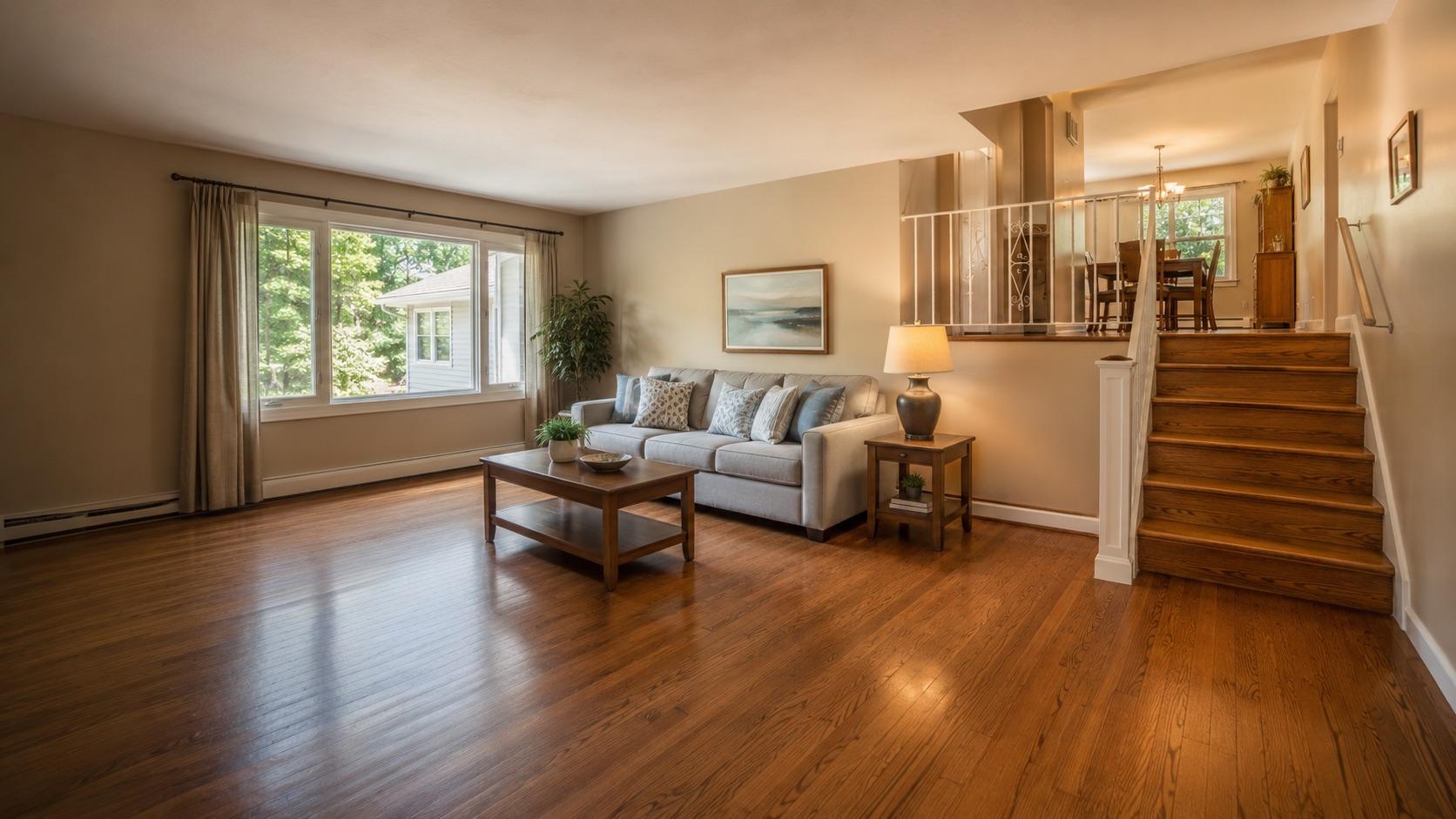
Image note: The hero is an existing site illustration, not a documented customer project or before-and-after result.
Related service
Explore flooring for your Aspen Hill home
See the service pageMore reads
- Hardwood Refinishing
Hardwood Refinishing in Potomac: The Finish Wears, Not the Wood
5 min read - Hardwood Installation
Hardwood Flooring in Olney, MD: Solid Above Grade, Engineered in the Basement
5 min read - Hardwood Flooring
Hardwood Flooring in Rockville: Solid, Engineered, or Refinish What's Already There
4 min read - Hardwood Flooring
Is Engineered Hardwood Real Wood? What the Layers Actually Mean
6 min read